
Chemistry Tuition Singapore | O & A Level | Best Chemistry Tuition Centre
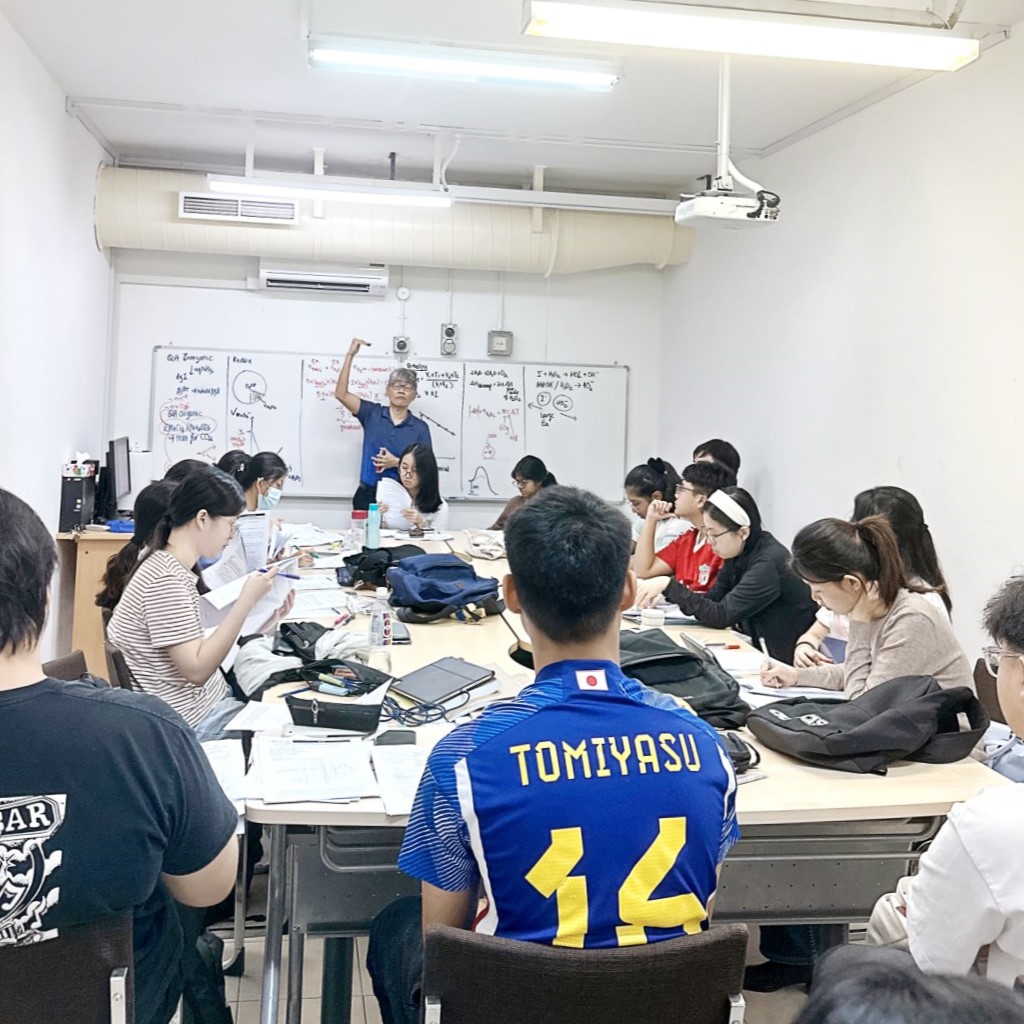
Chemistry Tuition Centre in Singapore: Achieve Top Results in Secondary, IP, O Level, A Level and JC Chemistry with SmartLab
Choosing the right Chemistry tuition programme can make a meaningful difference when a student needs clearer explanations, more structured practice or additional examination support. For parents comparing Chemistry tuition Singapore options, however, the question should not simply be which centre claims to be the best. A more useful question is whether the programme matches the student’s academic level, syllabus, learning gaps and examination goals.
Chemistry requires students to do more than memorise facts. They need to understand concepts, interpret information, perform calculations, explain chemical processes and apply their knowledge to unfamiliar questions. Therefore, effective Chemistry tuition should combine conceptual understanding with guided practice and examination preparation.
For students in Secondary school, IP, O-Level or Junior College, SmartLab provides Chemistry tuition as part of its wider academic programmes. SmartLab has been operating since 1999 and currently provides tuition across Singapore, with centres in Bishan, Kovan, Marine Parade and Woodlands.
Why Do Students Consider Chemistry Tuition in Singapore?
Students often consider Chemistry tuition when they find that classroom learning and independent revision are not enough to address their difficulties.
For some students, the problem begins with a weak foundation. For others, the concepts are understood but examination questions remain difficult. A student may know how to balance an equation but struggle with a multi-step calculation. Another may understand Organic Chemistry but lose marks because the final explanation is incomplete.
Chemistry tuition can provide an additional learning environment where students can:
- Clarify difficult concepts
- Strengthen weak foundations
- Practise examination-style questions
- Develop more systematic problem-solving methods
- Review mistakes with a tutor
- Improve confidence before school examinations
- Prepare progressively for national examinations
- Receive additional revision and question-practice support
However, tuition should solve a genuine learning need rather than become another routine activity.
A student who is already progressing well may need only occasional support, while a student with gaps across several topics may benefit from structured weekly lessons.
The best Chemistry tuition centre in Singapore for one student may therefore not be the best fit for another.
Who Can Benefit from Chemistry Tuition?
Chemistry tuition can support students with different academic goals and ability levels.
Secondary Chemistry Tuition
Secondary Chemistry introduces students to concepts that require more precise scientific reasoning than many earlier Science topics.
Students need to learn how chemical substances behave, how reactions can be represented, how calculations relate to chemical quantities and how observations can be explained using scientific concepts.
At this stage, a strong foundation matters.
If students misunderstand an important concept early, later topics may become increasingly difficult. Consequently, Secondary Chemistry tuition Singapore programmes should focus on understanding rather than simply completing more worksheets.
SmartLab’s Chemistry programme includes examination-oriented practice, with practice papers and time trials used as examinations approach.
IP Chemistry Tuition
Integrated Programme students may encounter Chemistry in a different academic pathway from students following a conventional O-Level route.
The exact sequence and depth can vary by school. Therefore, parents should check whether the Chemistry tuition programme is appropriate for the student’s IP syllabus rather than assuming that an O-Level programme will automatically provide the right coverage.
For IP students, useful support can include:
- Strengthening fundamental concepts
- Handling more challenging applications
- Developing calculation accuracy
- Building scientific reasoning
- Preparing for school assessments
- Establishing strong foundations for later JC Chemistry
The aim should be to help students understand Chemistry at increasing depth rather than merely prepare for individual tests.
O-Level Chemistry Tuition Singapore
O-Level Chemistry requires students to combine knowledge, application and examination technique.
For the 2026 GCE O-Level examination, SEAB lists Chemistry under subject code 6092.
Students preparing for O-Level Chemistry should develop confidence in areas such as:
- Atomic structure
- Chemical bonding
- Chemical equations
- Stoichiometry
- Acids and bases
- Redox Chemistry
- Organic Chemistry
- Chemical energetics
- Chemical reactions
- Experimental and practical skills
- Data interpretation
- Examination techniques
The exact syllabus requirements should always be checked against the current SEAB syllabus and the student’s school programme.
Looking for Tuition SG?
Why is O-Level Chemistry challenging for some students?
One reason is that Chemistry questions do not always ask students to repeat something they have memorised.
A question may introduce a new substance, experimental observation or unfamiliar context. The student then has to recognise the relevant Chemistry concept and apply it.
That is why O Level Chemistry tuition should include application-based practice.
Students need to learn how to think through questions, not simply remember model answers.
JC Chemistry Tuition: H1, H2 and A-Level Preparation
JC Chemistry requires students to work with concepts in greater depth and connect different areas of Chemistry.
For the revised 2026 A-Level syllabus, SEAB lists H1 Chemistry as 8873 and H2 Chemistry as 9476.
This is important for parents searching for JC Chemistry tuition Singapore, because older online pages may still refer to previous syllabus codes.
H1 Chemistry Tuition
H1 Chemistry has its own syllabus requirements, so students should choose tuition that is aligned with the syllabus they are actually taking.
The current H1 syllabus covers areas including atomic structure and other core Chemistry concepts.
H2 Chemistry Tuition
H2 Chemistry involves greater depth and a broader range of applications.
The current H2 syllabus includes organic reaction terminology and mechanisms, including electrophiles, nucleophiles, addition, substitution, elimination, condensation, hydrolysis, oxidation and reduction.
Therefore, effective H2 Chemistry tuition Singapore should help students understand relationships between concepts rather than treating each reaction or topic as an isolated piece of information.
JC students can benefit from:
- Structured topic revision
- Concept clarification
- Application questions
- Data interpretation
- Organic Chemistry practice
- Calculation practice
- Examination technique
- Timed papers
- Review of recurring mistakes
What Makes an Effective Chemistry Tuition Programme?
Not every Chemistry tuition programme is designed in the same way.
A useful programme should provide more than additional worksheets.
Strong conceptual teaching
Students should understand the reason behind a chemical process.
For example, instead of memorising a definition of chemical bonding, students should understand how bonding and structure influence the properties of substances.
Similarly, Organic Chemistry becomes easier to organise when students understand functional groups and reaction relationships.
Structured learning
A structured programme helps students progress from foundational concepts to more complex applications.
This is particularly important when a student has accumulated gaps across several chapters.
SmartLab states that its tuition programmes are built around its Exploration, Strengthening and Consolidation system, with structured notes, interactive lessons and examination-oriented worksheets.
Regular question practice
Chemistry is not learned effectively through reading alone.
Students should answer questions regularly and review why an answer is correct or incorrect.
Practice should gradually include:
- Basic concept questions
- Application questions
- Structured questions
- Calculation problems
- Data-based questions
- Examination papers
- Timed practice
Feedback on mistakes
A student cannot improve efficiently if every wrong answer is simply marked wrong.
The more useful question is:
Why did the student make the mistake?
The cause might be:
- A concept gap
- A calculation error
- Misreading the question
- Poor time management
- Incorrect terminology
- An incomplete explanation
- Failure to identify the relevant chemical principle
Identifying the cause makes revision more targeted.
Appropriate class size
Smaller classes can make it easier for students to ask questions and receive individual attention.
SmartLab currently states that its customised tuition classes have a maximum of six students.
Nevertheless, class size should not be the only consideration. Teaching quality, resources, tutor-student interaction, syllabus alignment and schedule also matter.
Chemistry Topics Students Commonly Find Challenging
Some Chemistry topics require more practice because they involve multiple layers of understanding.
Stoichiometry
Stoichiometry connects chemical equations with quantitative relationships.
Students may struggle when they need to move from a written equation to mole calculations, concentration or other numerical applications.
The solution is usually not more memorisation. Instead, students should practise identifying:
- What information is given
- What quantity is required
- Which chemical relationship applies
- Which equation or formula is needed
- Whether the final answer is reasonable
Chemical Bonding
Chemical bonding can become difficult when students learn definitions without understanding structure.
Students should be able to connect bonding, structure and properties.
That relationship becomes increasingly important as Chemistry progresses.
Chemical Energetics
Energetics can involve both conceptual and numerical reasoning.
Students need to understand energy changes while also being able to interpret diagrams, data and calculations where required by their syllabus.
Chemical Kinetics
Kinetics requires students to understand how factors such as concentration, temperature and catalysts affect reaction rates.
Questions may require students to interpret experimental results rather than simply recall a definition.
Equilibrium
Equilibrium is another area where students often need conceptual clarity.
They need to distinguish between a dynamic equilibrium and a reaction that has simply stopped.
Students may also need to reason through how changes in conditions affect an equilibrium system.
Acids and Bases
Students need to distinguish related but different concepts and apply them accurately.
Calculation questions can add another layer of difficulty.
Electrochemistry and Redox
Redox concepts are important because students need to understand electron transfer and oxidation-state changes.
Students who memorise isolated rules may become confused when the question uses an unfamiliar chemical system.
Organic Chemistry
Organic Chemistry can initially appear like a large collection of reactions.
A better learning approach is to organise reactions according to:
- Functional groups
- Reaction types
- Reagents
- Conditions
- Products
- Mechanisms where applicable
For H2 Chemistry, this becomes especially important because the revised syllabus explicitly addresses organic reaction terminology and mechanisms.
Practical Chemistry
Practical Chemistry should not be treated as an afterthought.
Students need to understand how experimental procedures relate to the underlying Chemistry and how observations, measurements and data can support a conclusion.
SmartLab currently provides an O/A-Level Science Lab programme and states that practical sessions are designed to prepare students for practical examinations, with scheduled sessions in March, June and October 2026.
How Chemistry Tuition Supports Examination Preparation
Good examination preparation should begin before the final revision period.
A practical approach is to divide preparation into four stages.
Stage 1: Find the weak topics
Students should identify which topics they genuinely understand and which ones they can only recognise when looking at notes.
Stage 2: Rebuild the foundation
Weak concepts should be revisited before attempting large numbers of difficult questions.
Otherwise, students may practise the same misunderstanding repeatedly.
Stage 3: Apply the concepts
Students should then work through progressively harder questions.
This is where Chemistry exam preparation becomes particularly valuable.
Stage 4: Analyse mistakes
Students should record recurring errors and use them to guide revision.
For example:
Common problem | Useful response |
Calculation errors | Practise step-by-step working |
Weak concepts | Revisit theory with examples |
Poor application | Do unfamiliar questions |
Incomplete explanations | Practise structured responses |
Slow paper completion | Use timed practice |
Organic Chemistry confusion | Organise reaction pathways |
SmartLab’s current Chemistry description specifically mentions practice papers and time trials as examinations approach.
Chemistry Tuition and Practical Laboratory Preparation
For students taking Chemistry at examination level, practical understanding deserves attention.
A student may know the theory but still struggle to interpret experimental observations or explain why a particular procedure is appropriate.
Practical preparation can involve:
- Understanding experimental procedures
- Interpreting observations
- Handling data
- Identifying sources of error
- Drawing appropriate conclusions
- Connecting experimental evidence with Chemistry concepts
SmartLab currently describes its Science Lab as providing hands-on practical preparation for O-Level and A-Level students in Biology, Chemistry and Physics.
The practical component should complement, rather than replace, strong theoretical learning.
Online Chemistry Tuition Singapore: Targeted Support When Students Need It
Not every Chemistry problem requires another full-length tuition class.
Sometimes a student simply needs help with one difficult question or concept.
SmartLab currently offers an Online Math & Science Clinic using short 5–15 minute Zoom sessions. The service supports Secondary 1–4 students in Chemistry and JC1–2 students in Chemistry, alongside selected Mathematics and Physics support.
This type of online Chemistry tuition Singapore support may be useful when a student:
- Gets stuck on one examination question
- Needs a concept explained differently
- Wants clarification during revision
- Needs help with homework
- Is checking a past-year paper
- Wants targeted examination assistance
- Prefers not to travel for a single question
At the same time, targeted online support is not necessarily a substitute for structured weekly tuition.
A student with significant gaps across an entire subject may need a comprehensive programme, whereas a confident independent learner may benefit from occasional targeted help.
Chemistry Tuition Near Me: SmartLab Locations in Singapore
Location matters because tuition needs to fit realistically into a student’s weekly routine.
A centre that is difficult to reach may make regular attendance inconvenient, particularly when students are balancing school, CCAs, examinations and other commitments.
SmartLab currently lists tuition centres in:
- Bishan
- Kovan/Hougang
- Marine Parade
- Woodlands
These locations are stated on SmartLab’s current tuition pages.
Chemistry Tuition in Bishan
Bishan can be a convenient option for students living in central Singapore and nearby areas.
When comparing Chemistry tuition Bishan, parents should consider the full programme rather than location alone: class size, teaching approach, syllabus coverage, timetable and student needs all matter.
Chemistry Tuition in Kovan
Students living in Singapore’s north-east may find Kovan more convenient for regular lessons.
For families searching for Chemistry tuition Kovan, accessibility can be particularly valuable when students have a busy school schedule.
Chemistry Tuition in Woodlands
Students in northern Singapore may prefer a tuition centre closer to home.
SmartLab currently lists Woodlands among its tuition locations.
For Chemistry tuition Woodlands, parents should assess convenience together with the actual Chemistry programme and student requirements.
Chemistry Tuition in Marine Parade
Marine Parade provides an option for families in the east.
When comparing Chemistry tuition Marine Parade, consider travel time, class timing and whether the programme fits the student’s level.
How to Choose the Right Chemistry Tuition Centre
Searching for Best Chemistry Tuition Singapore can produce many results.
However, “best” should be defined by the student’s needs rather than advertising language.
Before enrolling, consider these questions.
Does the centre teach the correct syllabus?
This is particularly important because Chemistry syllabuses change.
For example, SEAB lists the revised H1 Chemistry syllabus as 8873 and H2 Chemistry as 9476 for the 2026 A-Level examination.
Does the programme match the student’s level?
A Secondary student should not automatically join the same programme designed for JC students.
Likewise, H1 and H2 Chemistry should not be treated as interchangeable.
Does the tutor focus on understanding?
Ask whether the programme teaches students how to reason through questions or mainly provides memorised notes and model answers.
Is there sufficient practice?
Students need opportunities to apply knowledge through examination-style questions.
Is feedback provided?
Regular feedback can reveal recurring weaknesses before major examinations.
Are practical skills addressed?
For students taking examinations with practical components, ask how practical preparation is handled.
Is the class size suitable?
A smaller class can facilitate interaction and individual attention. SmartLab states that its customised classes have a maximum of six students.
Is the location convenient?
Convenience supports consistent attendance, which is important for long-term learning.
Is online support available?
Targeted online assistance can be useful for students who occasionally need clarification outside their regular lessons.
Why Consider SmartLab for Chemistry Tuition?
SmartLab has been providing tuition since 1999, making its long operating history one of the organisation’s established characteristics.
Its current tuition information highlights several features relevant to Chemistry students:
- Customised learning
- Small classes of up to six students
- In-house learning materials
- Experienced full-time educators
- Examination-oriented worksheets
- Past-paper practice
- Hands-on Science Lab support
- Physical tuition locations across Singapore
- Online academic support for targeted Chemistry questions
SmartLab describes its learning approach as the Exploration, Strengthening and Consolidation (ESC) system, with activity-based and problem-based learning incorporated into its programmes.
The current website also states that its tuition programmes use learning materials updated with the latest MOE syllabus and that its Science Lab supports practical examination preparation.
Most importantly, parents should match these features against the student’s actual needs.
The right Chemistry tuition programme should make it easier for a student to understand difficult concepts, practise effectively, recognise mistakes and approach examinations with greater confidence.
Conclusion: Choosing Chemistry Tuition That Supports Better Results
The right Chemistry tuition Singapore programme should do more than provide additional worksheets.
Students need opportunities to understand difficult concepts, apply Chemistry knowledge, practise examination questions and learn from mistakes. At the same time, parents need a programme that fits their child’s academic level, schedule, learning style and location.
For Secondary, IP, O-Level and JC students, the learning priorities can be very different. Therefore, choosing tuition based solely on a generic “best Chemistry tuition” claim may not produce the best fit.
SmartLab has been providing tuition since 1999 and currently offers Chemistry as part of its Science tuition programmes. Its current approach includes customised learning, small classes of up to six students, structured materials, examination practice, past-paper-based worksheets and practical Science Lab support.
For students who need occasional clarification rather than a full additional lesson, SmartLab also provides targeted online Chemistry support through its Online Math & Science Clinic.
If your child is struggling with Chemistry, preparing for O-Level or A-Level examinations, or simply wants a more structured way to improve, start by identifying the specific areas that need attention.
Then explore the Chemistry tuition programme that best matches the student’s level, learning needs and schedule.
Looking for Chemistry tuition in Bishan, Kovan, Woodlands or Marine Parade? Contact SmartLab to check the latest Chemistry class schedules, availability and suitable programme for your child.
Frequently Asked Questions (FAQs) :
What is Chemistry tuition?
Chemistry tuition is supplementary academic instruction designed to help students understand Chemistry concepts, practise questions, strengthen weak areas and prepare for school or national examinations. The exact programme should match the student’s academic level and syllabus.
Is Chemistry tuition useful for Secondary students?
Yes. Secondary students can use Chemistry tuition to strengthen foundations, clarify difficult concepts, improve calculation skills and practise examination questions. Additional support can be particularly useful when classroom learning alone has not resolved recurring difficulties.
Is O-Level Chemistry difficult?
O-Level Chemistry can be challenging because students must combine conceptual knowledge, calculations, application and examination technique. Regular practice and a strong understanding of foundational concepts can make the subject more manageable.
What is O-Level Chemistry subject code in Singapore?
For the 2026 GCE O-Level examination, SEAB lists Chemistry under subject code 6092. Students should always check the latest official SEAB syllabus for their examination year.
What is the current H2 Chemistry syllabus code?
For the revised 2026 GCE A-Level syllabus, H2 Chemistry is listed under subject code 9476. SEAB also lists H1 Chemistry under code 8873.
What should I look for in H2 Chemistry tuition?
Look for a programme that combines syllabus-aligned teaching, conceptual understanding, application questions, examination practice, feedback and revision. H2 Chemistry requires students to connect ideas rather than rely entirely on memorisation.
Can Chemistry tuition help with Organic Chemistry?
Yes. Organic Chemistry can become more manageable when students organise reactions around functional groups, reaction types, reagents and mechanisms. H2 students also need to understand organic reaction terminology and mechanisms under the revised syllabus.
Can Chemistry tuition improve examination technique?
It can. Students can learn how to identify what a question requires, organise calculations, use appropriate scientific terminology, explain reasoning and practise under timed conditions.
Does SmartLab provide Chemistry tuition?
Yes. SmartLab’s current tuition pages list Chemistry as one of its Science tuition subjects, with Chemistry practice including practice papers and time trials as examinations approach.
Does SmartLab provide Chemistry tuition for JC students?
SmartLab’s current online service specifically states that JC1–2 students can receive Chemistry support through its Online Math & Science Clinic. Parents should confirm current physical JC Chemistry class availability and schedules directly with SmartLab.
Does SmartLab provide online Chemistry tuition?
Yes. SmartLab currently offers targeted online Chemistry support through its Online Math & Science Clinic, with 5–15 minute Zoom sessions for specific questions, concepts and examination-related assistance.
Can online Chemistry tuition replace regular tuition?
Not necessarily. Short online support is useful for targeted questions, while students with broader learning gaps may benefit from structured weekly tuition. The appropriate format depends on the student’s learning needs.
Does SmartLab offer practical Chemistry support?
SmartLab currently describes its Science Lab as providing hands-on preparation for O-Level and A-Level practical examinations, including Chemistry.
Where does SmartLab provide tuition in Singapore?
SmartLab currently lists centres in Bishan, Kovan, Marine Parade and Woodlands. Families should confirm current Chemistry class schedules and availability directly with the relevant centre.
What class size does SmartLab offer?
SmartLab currently states that its customised tuition classes have a maximum of six students. As a result, smaller classes can allow more interaction and individual attention. However, teaching quality and programme suitability should also be considered.
When should a student start Chemistry tuition?
There is no universal starting point. For example, some students benefit from support when Chemistry becomes difficult, while others seek additional tuition closer to major examinations. Therefore, identifying learning gaps early generally provides more time to address them.
Is Chemistry tuition only for students who are failing?
No. However, students may seek tuition for many reasons, including strengthening foundations, improving examination technique, preparing for O-Level or A-Level examinations, or developing greater confidence with challenging questions.
How do I choose Chemistry tuition near me?
First, identify the student’s level and syllabus. Then, compare teaching methods, class size, resources, practice opportunities, feedback, schedule and accessibility. However, location is important, but it should be considered alongside academic suitability..
What makes a good Chemistry tutor?
A good Chemistry tutor should, therefore, explain difficult ideas clearly, adapt explanations when students do not understand, guide students through problem-solving and identify recurring mistakes. Moreover, strong subject knowledge should be combined with effective teaching.
How can parents find suitable Chemistry tuition in Singapore?
Start by identifying the student’s main learning problem. Next, compare Chemistry tuition programmes based on syllabus alignment, teaching approach, class structure, resources, examination preparation, practical support, location and online options. Therefore, a suitable programme should address the student’s actual needs rather than simply promise better grades.
Which SmartLab centre is best for Chemistry tuition near Bishan?
SmartLab Bishan is a convenient choice for Chemistry tuition. Moreover, students from Bishan, Toa Payoh, and Ang Mo Kio can easily access its structured lessons and expert guidance.
Is there a Chemistry tuition centre near Kovan MRT?
Yes. SmartLab’s Kovan centre is conveniently located near Kovan MRT. Therefore, students from Hougang, Serangoon, and Sengkang can easily attend structured Chemistry tuition classes.
Where can students in Woodlands attend Chemistry tuition?
Students from Woodlands, Admiralty, Marsiling and nearby neighbourhoods can attend Chemistry tuition at SmartLab Woodlands.
Is Chemistry tuition available for students living in Marine Parade?
Yes. SmartLab offers Chemistry tuition at its Marine Parade centre. Moreover, students from Katong, Bedok, and nearby East Coast areas can conveniently access structured lessons and expert guidance.
Can students from Ang Mo Kio join Chemistry tuition?
Yes. Students from Ang Mo Kio can easily join Chemistry tuition at SmartLab Bishan. Moreover, its convenient location, structured lessons, and experienced tutors make learning Chemistry more effective.
Can students from Serangoon attend Chemistry tuition?
Yes. Students from Serangoon can conveniently attend Chemistry tuition at SmartLab Kovan. Moreover, the accessible location makes travel easier. Consequently, students can attend structured lessons regularly and receive focused academic support.
Is Chemistry tuition available for students from Sengkang?
Yes. Students from Sengkang can conveniently attend Chemistry tuition at SmartLab Kovan. Moreover, the accessible location makes regular travel easier, while structured lessons provide focused learning and effective academic support.
Which SmartLab branch is convenient for Bedok students?
Students living in Bedok often choose SmartLab Marine Parade for convenient Chemistry tuition. Moreover, the centre’s accessible location makes travelling easier. Consequently, students can attend structured lessons regularly while benefiting from focused learning and expert academic guidance.
Is SmartLab Chemistry tuition suitable for students from Yishun?
Yes. SmartLab Chemistry tuition is suitable for students from Yishun. Moreover, learners can conveniently travel to the Woodlands centre, making it easier to attend structured lessons regularly and consistently.
Is Chemistry tuition available for students near Catholic High School?
Yes. Students near Catholic High School can conveniently attend Chemistry tuition at SmartLab Bishan. Moreover, its accessible location helps students save travel time while maintaining a consistent learning schedule.
Can students from Toa Payoh attend Chemistry tuition?
Yes. Students from Toa Payoh can easily attend Chemistry tuition at SmartLab Bishan. Moreover, the centre’s convenient location provides easy access, helping students save travel time and attend lessons consistently.
Is SmartLab Chemistry tuition suitable for East Singapore students?
Yes. SmartLab Chemistry tuition is suitable for students across East Singapore. Moreover, learners from Marine Parade, Katong, Bedok, Siglap, and nearby neighbourhoods can conveniently attend the Marine Parade centre. Additionally, students benefit from structured lessons, expert guidance, and focused exam preparation.
Is SmartLab Chemistry tuition suitable for North Singapore students?
Yes. SmartLab Chemistry tuition is suitable for students across North Singapore. Moreover, learners from Woodlands, Admiralty, Marsiling, and Yishun commonly attend the Woodlands centre. Therefore, students can benefit from convenient access to structured Chemistry lessons, expert guidance, and focused exam preparation
Sample Materials
O Level Chemistry Tuition
A Level Chemistry Tuition
Chemistry Science Lab
Check out our quarterly O/A Level Chemistry Science Lab Practical here


